For Companies
I enable the upgrade of organizational architecture, culture and group dynamics blending solutions from my Tool-Belt of instruments and models.
For Individuals
I accompany individuals through lifestyle-design, business coaching, overcoming inner blockages and distilling their purpose.
THE WHY
I see, and dedicate my support to an emerging paradigm shift in organizational architecture, culture and social dynamics towards rapidly adaptive, highly productive and internally motivated distributed and autonomous clusters of teams made up of self reflective and constantly evolving individuals, collectively driven by; and united around; a meaningful company purpose and values that serve and contribute to the well-being of the World in powerfully impact-full ways.
This phenomenon refers to the shift into ''New Work'' and what Frederic Lalaoux calls ''Teal Organizations''. Many authors are documenting, heralding and inventing this revolution as it happens.
I find my place within the movement of organizations that in this time in History are on a pathway to re-invent leadership, management, success indicators, concepts of value, ownership, power, conflict, wealth, security and responsibility and outperform preexisting models while revolutionizing whole industries and markets. They cultivate conscious and humane work environments and are multi-stakeholder oriented and steered. They are in tune with the technological and generational shift at the workplace and may be acting locally but are thinking globally.
THE HOW
Change of Human Behavior is where beautiful and inspiring theories and intentions crash into the perplexing complexity of Real Life. There are many models that help explain so much but very few solutions enable real transformation of day-to-day behavior, habits, beliefs, emotions and worldviews.
For 10 years have traveled and explored the fringes of what social technologies exist today that deal with critical meta-topics such as: power, money, community, time, transcendence and shadow. I experienced what some of them actually feel like in practice and their effects in Real Life on individuals and groups. I tested and applied solutions and models on myself and organizations I worked in or consulted and derived my own conclusions about the opportunities of intentionally leading Change in these times. I share further those few "solutions" that I experienced creating last palpable transformation and deeply meaningful life changes.
THE WHAT
Here are some of the more common formats I deliver. The tools which I combine to implement these formats are in the Tool-Belt section below.
- Assessment of the organization
- Training programs
- Structural design or redesign
- Leadership training and Possibility Coaching
- Conflict transformation
- Community building
- Strategy formulation
Get in touch with me if I touched your interest. The first coaching or consulting session is a gift, free of charge and obligation. After getting to know each-other we can discuss price and collaboration. Find my email address in the Contact section.
Tool-Belt
From a decade's worth of experiences with Organizational Evolution and Entrepreneurship I have put together a Rubik's Cube of possible ingredients.


"Through transformational trainings, Possibility Management offers modern initiation work into adulthood."

"Deep Democracy has been applied to all sorts of conflicts including terrorism, revolution, diversity issues of all sorts, economic problems, school conflict, climate change, large corporation tensions, government leadership questions etc."

"A learning journey for those that are seeking to marry purpose with livelihood."

"A systemic design process, a philosophy and a methodological framework, for the realization of collaborative and sustainable projects, organisations and platforms"

"Designing a society which uses energy and materials with greater efficiency, distributes wealth fairly and strives to eliminate the concept of waste"

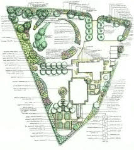
"Permaculture is a set of design principles centered around whole systems thinking simulating or directly utilizing the patterns and resilient features observed in natural ecosystems."
Projects
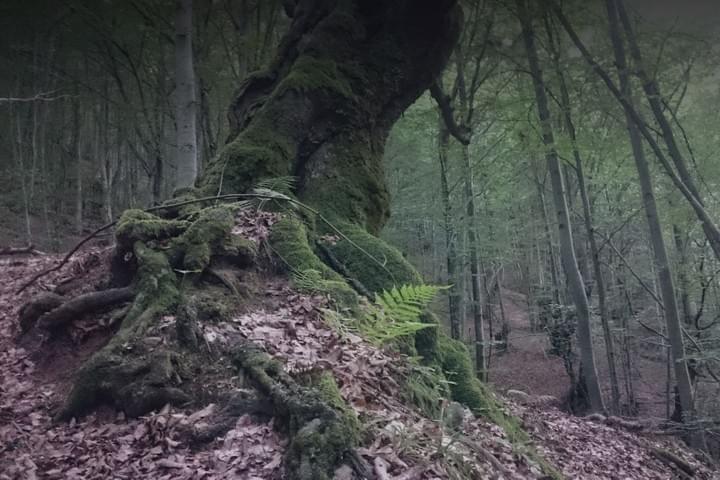
''The use of natural history is to give us aid in supernatural history: the use of the outer creation, to give us language for the beings and changes of the inward creation.''
Ralph Waldo Emerson

2019 to present
The Urban Hub for Ethical Entrepreneurs and the Change-makers Ecosystem. The Legacy is 3 things: an Urban Community Garden and Sustainable Tech Showcase Site, Lab for Transformative Educational Programs, Co-Working space for Ethical Entrepreneurs and Change-makers.

The Stretch Consultancy
2018 to present
We are a European boutique for designing, consulting, coaching, mentoring, training, hosting, facilitating, supporting organizations in transition and transformation.
We offer a wide array of services aimed supporting the evolution of societal structures by means of catalyzing individuals as a driving force of agency.

Arise.education - Education for Wholeness
2016 to present
We design tailor made programs for more human organizations. The emerging edge in organizational practice, culture forging and power of results.
SEOC - Sociocracy 3.0 Empowering Organizational Capacity
2015 - 2018
In 2015, I dreamt up, designed and applied for E+ funding for SEOC. Since then its fruits touched several dozens of organizations and hundreds of change-makers.

Terra Livre - The Forest has No Boundries
2013 to present
In my heart I have always been an Earth Guardian. I fund-raise, train and build organizational capacity and network for Terra Livre which exists for the conservation and regeneration of endangered worldwide natural landscapes.

Other Projects
2010 to present
I initiated and co-initiated: The Legacy | Bucharest, The Stretch Consultancy, Nested Bungalow Gardens, SEOC, Ecosophy Network, Communities Convergence, Community Tours, The Gift Economy Network, Youth Rejuvenating Community, 4 Years Go Romania (Pachamama Romania).
I have been a co-creator in: Arise Education, Aurora Community, Aurora Circle, ecobasa.org, the SIRCLe project, Asociatia Romania in Tranzitie, Transition Hubs Network.